

How to Choose Silicone Membrane Sheet for Vacuum Pressing
A vacuum press is only as good as the membrane doing the pressing. The sheet turns vacuum into even pressure across a veneer, a laminate, or a composite layup, and the wrong one shows up as weak spots, marked surfaces, or a membrane that tears out after a handful of cycles. Choosing well comes down to matching a few measurable properties to the parts you press and the heat your process runs.
What You’ll Find
- What a silicone membrane does in a vacuum press
- The five factors that decide membrane choice
- Silicone vs natural rubber
- How to spec a membrane in five steps
- Choosing a membrane for composites
- Choosing a membrane for woodworking
- Press compatibility and sheet size
- Cost, longevity, and maintenance
- When a silicone membrane isn’t the right choice
- Frequently asked questions
What a Silicone Membrane Does in a Vacuum Press
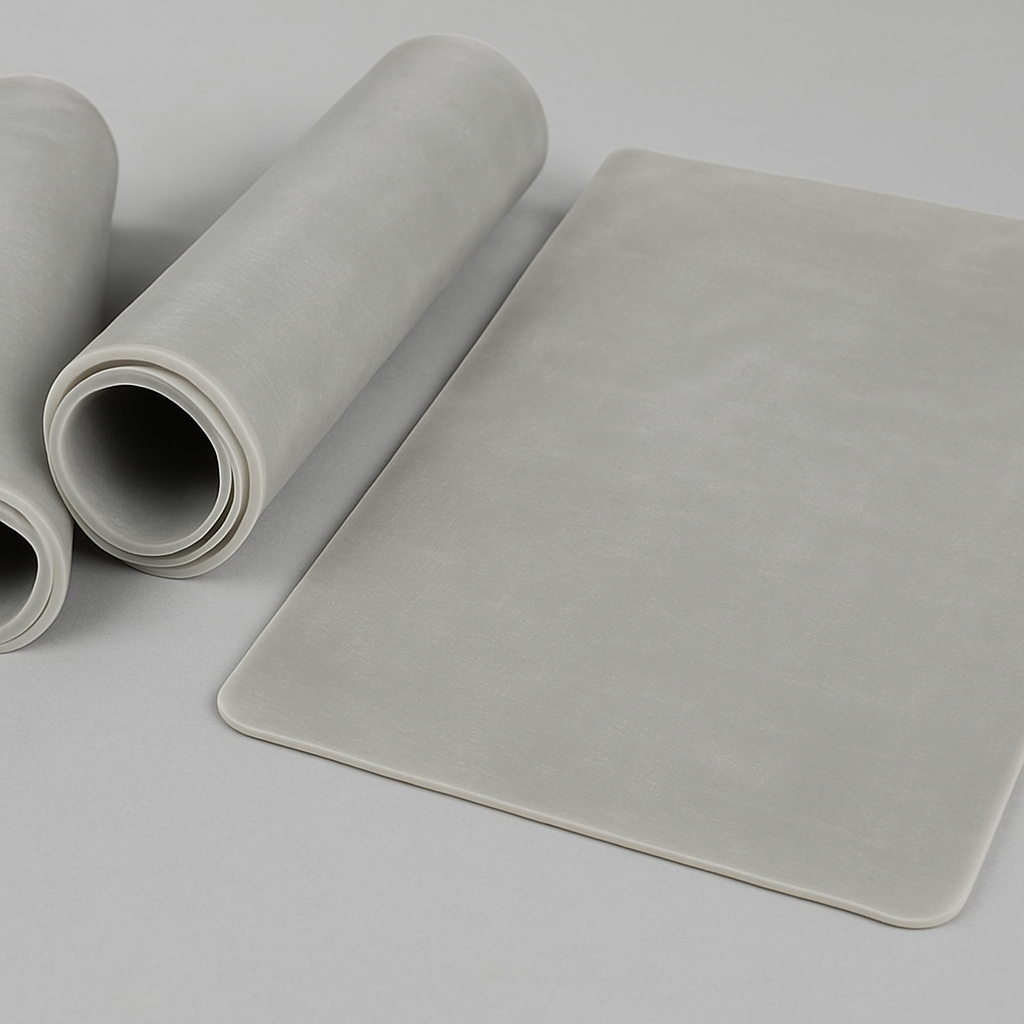
In a vacuum press, the membrane is a flexible sheet that drapes over the workpiece and the mold. When the pump pulls the air out, atmospheric pressure presses the membrane down evenly across the whole part, and a veneer bonds flat, a foil wraps a routed edge, or a laminate consolidates without voids. The sheet has to stretch into the shape without splitting, release cleanly, and come back to do it again on the next cycle. Silicone earns its place here because it holds that elasticity across heat and repeated use, where lesser materials harden, mark the work, or tear. How well a given sheet does the job comes down to the properties below.
The Five Factors That Decide Membrane Choice
Membrane selection starts with your application and your press, then narrows to five properties that shape forming quality, surface finish, and service life. The table sums up what each one controls before the detail that follows.
|
Factor |
What it controls |
How to choose |
|
Thickness |
Flexibility vs durability | 1 mm for deep or detailed draws; 2 to 3 mm for flat panels and long runs |
| Hardness (durometer) | Conformance vs pressure spread |
30 to 45 Shore A for intricate contours; 50 to 60+ for flat or gently curved |
|
Temperature rating |
Heat the sheet can take | Rate above peak press temperature; silicone to ~250°C |
| Elongation and tear strength | Stretch and cut resistance |
High elongation for deep draws; high tear for sharp tools and high cycles |
|
Surface texture |
Finish transferred to the part |
Smooth for gloss foils; textured for matte and scuff-hiding |
Thickness
Thickness trades flexibility against durability. Thinner sheets around 1 mm stretch into deep draws and fine detail, which suits intricate forming and deep molds. Thicker sheets of 2 to 3 mm and beyond resist abrasion and last longer under repeated high-pressure cycles, at the cost of some flexibility on deep shapes. As a starting point, run 1 mm for deep or detailed work, 2 mm as a general-purpose middle, and 3 mm for flat panels or abrasive, high-count runs.
Read: How to Choose Silicone Membrane Thickness
Hardness and Durometer
Hardness is measured on the Shore A scale under the ASTM D2240 standard, reported from roughly 5 to 100, where a higher number is firmer. Durometer decides the balance between conforming to a shape and spreading pressure across it. Soft grades of 30 to 45 Shore A wrap deep profiles, delicate veneers, and intricate contours. Mid grades around 50 conform reasonably while lasting longer. Firm grades of 55 to 60 and up spread pressure evenly across flat or gently curved panels and hold up over long runs. Match the durometer to the sharpest, deepest geometry you run.
Read: Choosing the Right Silicone Membrane Hardness
Temperature and Adhesive Compatibility
The membrane has to stay stable above your peak press temperature, not right at it. Silicone commonly handles continuous use up to around 250°C, which covers veneer lamination, foil pressing, and most thermoforming, and leaving margin above your highest routine setting keeps the sheet from aging early. Press temperature is often set by the adhesive rather than the substrate, so confirm the membrane and the glue work together, since some adhesives run hotter or outgas more than the wood or foil alone would suggest.
Elongation and Tear Strength
Elongation is how far the sheet stretches before it fails, and good silicone membranes reach 700 to 800 percent, with some grades higher. High elongation lets one flat sheet draw down into a deep cavity without splitting, so deep molds and complex shapes want a high-elongation grade. Tear strength is its partner, because a sheet can stretch well and still fail early when a nick at a sharp edge propagates into a tear. Sharp tooling, hard edges, and high cycle counts all call for higher tear-strength grades.
Surface Texture
Surface finish transfers to the part, so the membrane face has to match the finish you need. Smooth membranes suit high-gloss foils and sensitive finishes. Textured membranes reduce visible scuffs and shadows, limit memory-effect marks on sharp edges, and release more easily from 3D laminate. Pick smooth for gloss, and textured for matte and for parts where clean release and scuff-hiding matter more than shine.
Silicone vs Natural Rubber
Silicone is not the only membrane material, and the choice comes down to heat and finish. The table sets the two side by side.
|
Property |
Silicone | Natural rubber |
| Temperature | Higher; continuous to ~250°C |
Moderate; often set by the adhesive |
|
Adhesive chemistry |
Handles aggressive chemistries | Better with milder, lower-temp glues |
| Tear resistance | High |
Very high |
|
Contact face |
Smooth or textured; clean release | Soft, matte; gentle on veneer |
| Best for | High-temp, composites, repeated heated cycles |
Lower-temp veneer and deep contours |
Silicone wins on heat, chemistry, and heated-cycle life; natural rubber wins on a soft, matte contact face for lower-temperature veneer work. The hotter the process and the more aggressive the adhesive, the more silicone is the answer.
How to Spec a Membrane in Five Steps
With the factors clear, speccing a membrane follows a short, repeatable path:
- Start with the parts and press. Note what you form (veneer, foil, laminate, composite), the deepest draw, and the sharpest geometry.
- Fix the temperature and adhesive. Take your highest routine press temperature and the adhesive it runs, then choose a material rated comfortably above it: silicone for high heat and aggressive glues, natural rubber for lower-temperature veneer.
- Set the durometer to the geometry. Soft grades of 30 to 45 Shore A for intricate, deep shapes; firm grades of 55 to 60 and up for flat or gently curved panels.
- Set the thickness to the draw depth. Thin (about 1 mm) for deep or detailed forms; thicker (2 to 3 mm) for flat parts and long, abrasive runs.
- Choose the surface and size. Smooth for gloss, textured for matte, then size the sheet to the vacuum table and tallest stack with clamping margin.
Bring those five answers to a supplier and the membrane configuration falls out quickly, with far less trial and error than ordering a generic sheet and hoping it fits.
Choosing a Membrane for Composites
Composite forming pushes a membrane on temperature and conformance at once. Carbon and glass parts cure across a wide band, from out-of-autoclave schedules around 250°F (121°C) to autoclave cycles near 350°F (177°C), so the membrane’s continuous temperature rating has to clear the cure with margin, and only high-temperature silicone grades cover the autoclave end. The sheet also has to draw the laminate down onto the tool at uniform pressure without bridging at radii, so high elongation and a durometer matched to the part geometry matter most. For reusable vacuum bagging, a silicone membrane replaces disposable film and its per-part tape-and-film cost and removes the leak points those bags introduce, and cost-per-cycle turns in silicone’s favor over a production run. Smartech’s membranes for composite forming are specified around cure temperature, part geometry, and cycle life for exactly this work.
Choosing a Membrane for Woodworking
Woodworking presses lean on the membrane for surface quality as much as pressure, and the two main jobs ask different things of the sheet. Veneer pressing on flat panels and gentle contours wants even pressure, a soft contact face, and a clean release that leaves the grain unmarked. 3D lamination, which wraps decorative foil over routed MDF doors and contoured parts, asks the sheet to stretch into detail and release without shine or scuffing, so a textured face and a softer durometer earn their place. Match the surface to the finish: smooth for high-gloss foils, textured for matte foils and parts that are not flat. Smartech’s membranes for woodworking veneer and 3DL cover both the smooth and textured grades these shops run.
Press Compatibility and Sheet Size
A membrane only performs if it fits the press. Measure the vacuum table and the tallest workpiece stack so the sheet seals fully without overstretching, and add margin for clamping at the frame. A slightly larger membrane generally seals better than one cut tight. Confirm the press’s peak and dwell temperatures against the membrane rating, and order cut sheets or rolls sized to your press brand and format rather than trimming down a generic sheet.
Membrane cost
Membrane cost is a cost-per-cycle question, not a purchase-price one. A grade that survives more cycles with fewer failures is cheaper over a run even at a higher sheet price, and in well-managed presses a quality silicone membrane can run through hundreds of cycles before it needs replacing. Divide the sheet price by the cycles you expect and compare that number, not the sticker. A few habits protect the investment: clean the membrane with mild, non-abrasive cleaners; inspect for thinning or small tears and address them before they spread; store the sheet flat, cool, and away from direct sun and solvents; and handle it gently during install and removal.
Read: How to Extend the Lifespan of Silicone Rubber Products
Choose Smartech for Durable, High-Performance Silicone & Rubber Membranes
Selecting the right silicone membrane sheet for vacuum pressing is integral to achieving high-quality, consistent results. Weighing factors such as thickness, hardness, temperature resistance, and material properties helps you select a membrane that aligns with your parts, your press, and your production needs.
For more than 25 years, Smartech has served as the North American distributor for Steinbach AG, offering a comprehensive range of Silicone & Rubber Membranes designed for a wide range of vacuum pressing applications. Our products are engineered for durability, flexibility, and performance, ensuring they meet the demands of your specific processes.
Reach out today! Our team is ready to support you in selecting the right membrane to achieve optimal results in your applications.
Frequently Asked Questions
What is a silicone membrane?
A silicone membrane is a flexible, heat-resistant sheet used in vacuum presses, thermoforming, and composite molding. Under vacuum, it presses evenly over a workpiece and mold, distributing pressure so parts bond and form consistently. Silicone is favored for its temperature resistance and its elasticity across repeated cycles.
How thick should a silicone membrane be for a vacuum press?
Most vacuum press membranes run between 1 and 3 mm. Thinner sheets around 1 mm flex into deep and detailed forms, while thicker sheets last longer under repeated high-pressure cycles. A 2 mm sheet is a sensible general-purpose middle; choose thickness against your forming depth and how hard the press runs.
What Shore hardness should a vacuum press membrane be?
It depends on geometry. Softer grades around 30 to 45 Shore A conform to deep or intricate shapes, while firmer grades of 55 to 60 and up spread pressure across flat panels and last longer. Match durometer to the deepest, sharpest parts you press.
What is the difference between silicone and natural rubber membranes?
Silicone handles higher temperatures and more aggressive adhesives and holds its elasticity across heated cycles. Natural rubber offers very high tear resistance and a soft, matte face for veneer and deep contours at moderate temperatures. Heat and finish usually decide the choice. Read: Silicone vs Rubber
How long does a silicone vacuum press membrane last?
Service life depends on temperature, geometry, tooling, and handling. In well-managed presses, quality silicone membranes commonly run through hundreds of cycles, and careful cleaning, storage, and handling extend that further. Compare grades on cost per cycle rather than sheet price.
How much does a silicone membrane cost?
Price varies with material, grade, thickness, and sheet size, so membranes are usually quoted against your press and application rather than sold at a flat sheet price. A quick spec of your press format, temperature, and parts is enough to get a configuration and a price.
Looking for More Information?
Check out our Resources or Contact Us